
Christian marriage: what it means in practice, not in theory
A cord of three strands: the meaning of Ecclesiastes 4:12 in marriage
Quick answer
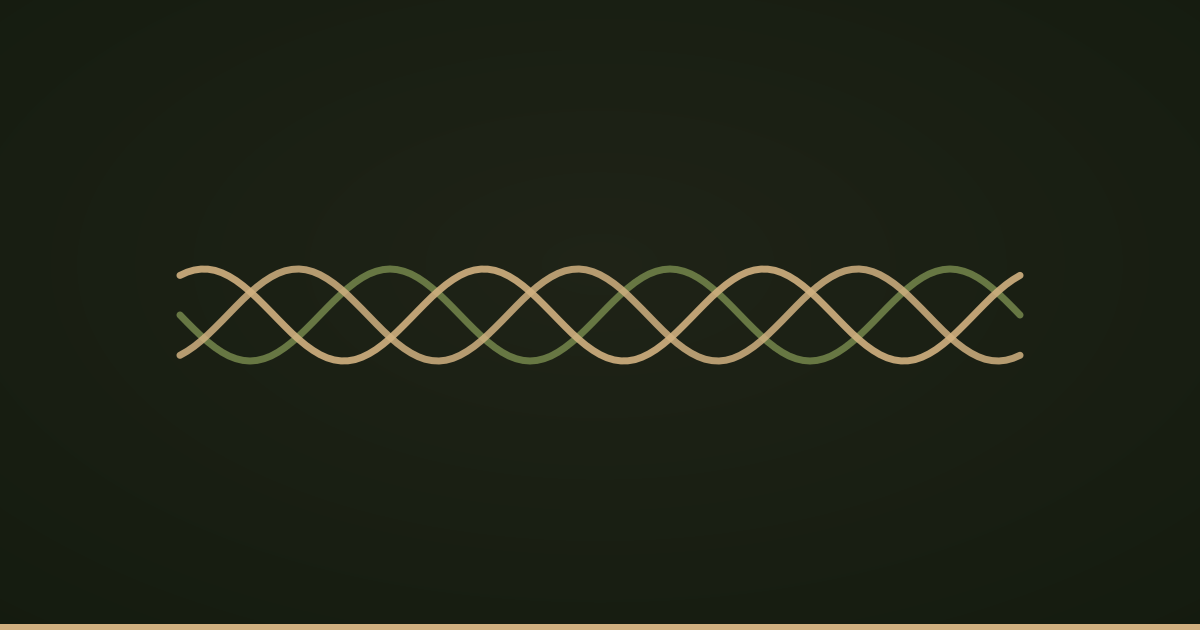
The cord of three strands comes from Ecclesiastes 4:12: a cord braided from three strands is not quickly broken. In context it speaks about the value of not being alone. Christian tradition applies it to marriage as an image of husband, wife and God woven together: when both spouses are weak at once, the third strand holds.
Where it comes from
The phrase comes from the book of Ecclesiastes, chapter 4, verses 9 to 12. The passage reflects on loneliness and companionship. In our own words, it says that:
- Two people achieve more than one with the same effort.
- If one falls, the other lifts them up; pity the one who falls alone.
- Two who lie down together keep warm.
- One alone can be overpowered; two together can resist.
- And a cord braided from three strands isn’t quickly broken.
That last line is where the phrase “a cord of three strands” comes from.
What it means in its original context
The writer of Ecclesiastes isn’t talking about weddings. He is talking about something broader: no one is made to face life alone. Companionship multiplies effort, protects in a fall and gives warmth in the night.
The third strand appears at the end, almost as a leap: if two are already better than one, three are stronger still. The text doesn’t say who the third is. That is why tradition has been able to read it several ways.
Why it is applied to marriage
The most widespread Christian reading sees the cord of three strands as an image of marriage: husband, wife and God woven together. It makes sense for several reasons:
- Marriage is the closest form of companionship the Bible describes: “the two shall become one flesh” (Genesis 2:24).
- The image of the cord says something every marriage discovers: there will be times when both of you are weak at once. Tired, hurt, discouraged. In those moments, a bond that depends only on the will of the two is stretched to its limit.
- Psalm 127 says something similar: unless the Lord builds the house, its builders labor in vain.
Research on religiousness and marriage, such as that of Annette Mahoney and Kenneth Pargament, found that couples who experience their marriage as having spiritual meaning tend to report more satisfaction and better handling of conflict. It is an association, not a guarantee, and it depends on how that faith is lived.
What the image teaches about daily life
A cord isn’t braided in one pull. It is braided turn by turn. That may be the most practical lesson of the cord of three strands:
- A strong marriage is built through small, repeated habits, not isolated big moments.
- Every strand counts. If one loosens, the cord weakens even if it doesn’t break.
- The three strands cross constantly. Faith isn’t a separate compartment of marriage: it weaves into conversations, forgiveness and time together.
In practice, braiding the third strand can be as simple as praying together for two minutes a day or starting a couples devotional.
The cord of three strands wedding ceremony
Many Christian weddings include a moment when the couple braids a three-strand cord, sometimes called a unity braid. It isn’t an ancient tradition, but it has spread widely because it makes the commitment visible.
How it works
- Three cords are prepared, fastened at one end. They are usually different colors: one represents God and the other two each spouse.
- Someone reads Ecclesiastes 4:9-12 or says a few words about its meaning.
- The couple braids the three cords together. Often the bride braids while the groom holds the end, or they take turns.
- The end is tied and the cord is kept, often framed, as a keepsake.
Common colors
There are no required colors. White, gold and purple are common, with meanings like purity, God’s presence or royalty. Some couples choose their wedding colors or the colors of their countries. What matters is what they represent.
Possible words for the ceremony
“Just as these three strands are woven into one cord, today we join our lives with God at the center. When one of us grows weary, may the other lift them up. And when we both grow weary, may He hold us.”
A misuse worth avoiding
Like other texts about marriage, this verse has sometimes been used to pressure someone to stay in a relationship that harms them: “the cord doesn’t break.” The text describes a bond that protects those who form it. If there is violence, control or fear in your marriage, faithfulness to this verse doesn’t mean enduring, but seeking protection: immediate help.
Why 3CORD is named this way
The name 3CORD comes from this verse. Our tagline, “a cord of three is not easily broken!”, sums up the idea behind the app: a marriage isn’t held up by two alone. That is why in the app, daily progress only advances when both spouses complete the day’s devotional: each turn of the cord is made together, with God at the center.
For this week
Read Ecclesiastes 4:9-12 together in your Bible. Then each answer one question aloud: “When this year did you feel the other lifted you up?” And choose one small habit to braid the third strand for seven days: praying for two minutes, reading a verse or thanking each other for something specific before bed.
What the research says
Couples who attribute sacred meaning to their marriage —not simply those who attend church— tend to report more collaboration, less destructive conflict and more commitment. What correlates with relationship quality is shared practice at home, more than separate attendance.
Annette Mahoney y Kenneth PargamentRevisiones sobre santificación del matrimonio y religión en la familia
What it does not prove:This is correlational evidence. It may reflect that couples already doing well practice together more, rather than the reverse. Nor does it protect on its own: high religiosity also appears in marriages where there is control or violence.
The quality of close relationships has measurable effects on physical health and mortality, comparable to classic risk factors. Isolation is not merely emotional discomfort: it behaves like a health problem.
Julianne Holt-Lunstad y colaboradoresMeta-análisis sobre relaciones sociales y mortalidad
What it does not prove:The finding concerns close relationships in general, not marriage specifically, and it does not imply that staying in a harmful relationship protects health. Quite the opposite.
Relationship research is mostly correlational and conducted on specific populations. It describes group tendencies; it does not predict what will happen in any particular marriage, including yours.
What the Bible says
Ecclesiastes 4:9-12
Two people together withstand more than one alone, and a cord braided from three strands holds far more than one of two. That is where the name 3CORD comes from: a marriage is not held up by two alone.
When both are exhausted at once, the bond needs to rest on something larger than either person’s willpower.
Genesis 2:24
Marriage involves leaving the family of origin to form a new unit. Leaving does not mean abandoning or dishonoring: it means the primary loyalty changes direction.
When parents still decide things about the marriage, what is missing is not affection toward them: it is that the new unit was never declared.
Psalm 127:1
Unless the Lord builds the house, the builders labor in vain. It does not invalidate effort: it puts it in place, as part of something that does not depend on effort alone.
It works as an antidote to both traps: believing effort alone is enough, and believing nothing needs doing.
Frequently asked questions
What does a cord of three strands mean?
It is an image from Ecclesiastes 4:12: a cord braided from three strands is far stronger than one of one or two. In Christian marriage it is read as the union of husband, wife and God: a relationship that doesn't depend only on the strength of the two.
Is Ecclesiastes 4:12 about marriage?
Not directly. The passage (Ecclesiastes 4:9-12) is about the value of companionship over loneliness: two work better, lift each other up, keep each other warm and defend each other. Applying it to marriage is a later Christian reading, widespread and consistent with the text's meaning.
How does a cord of three strands wedding ceremony work?
During the ceremony, the couple braids three cords — often different colors, one representing God and one for each spouse — while someone reads the passage or says a few words. The braided cord is kept afterward as a reminder of the commitment.
What colors are used for the cord of three strands?
There are no required colors. White, gold and purple are common, often given meanings like purity, God or royalty, but each couple can choose its own. What matters is what they represent, not the color.
← Christian marriage: what it means in practice, not in theory
3CORD offers faith-based support and educational content. It is not therapy, clinical counseling, or medical, psychological, legal or financial advice.